
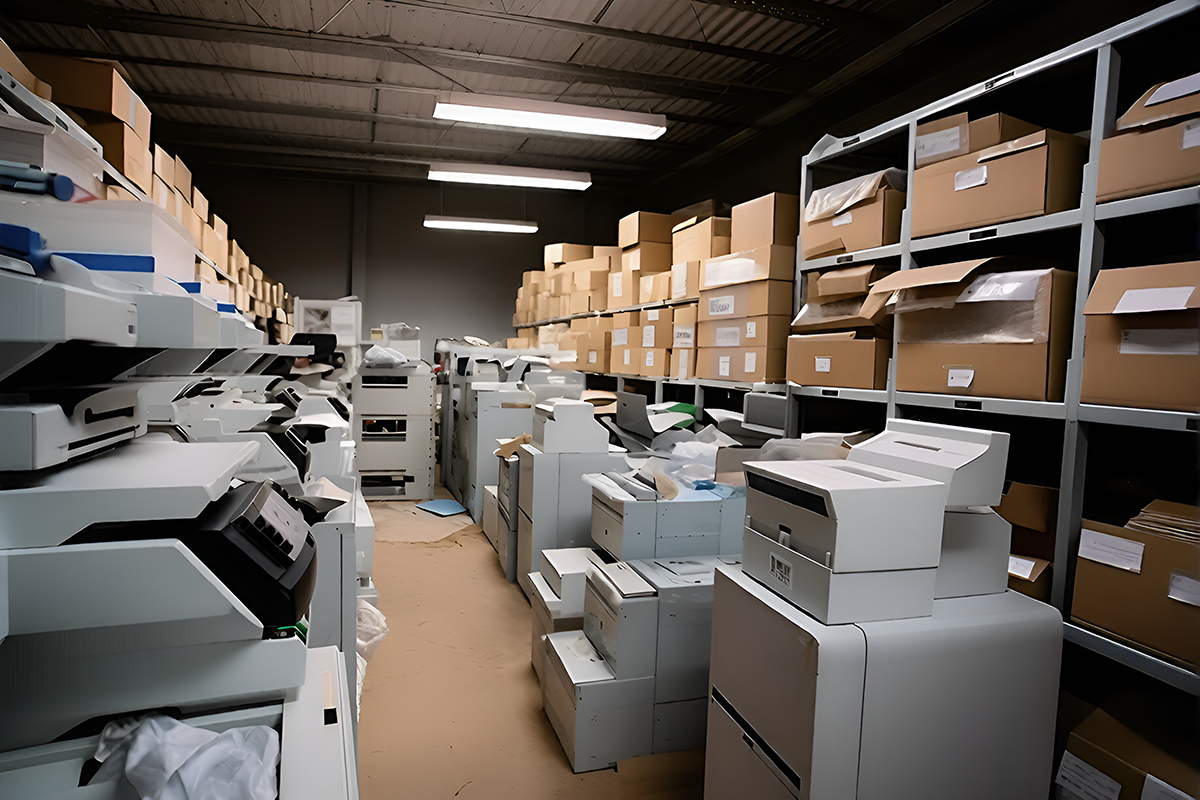
Business & Office Printers
Think about how many pieces of equipment in your office actually get used every single day. Not the coffee machine that sits idle most afternoons or the shredder that comes out once a month. It is the printer. It prints invoices before lunch, contracts before a client meeting, and shipping labels right as someone's rushing out the door. That kind of daily grind means a printer has earned its spot on the desk.
Most of the printers people end up regretting weren't bad machines. They were the wrong machines. A model built for a home office ends up buried in an operation that runs two hundred pages a day, and by the second week, it's jamming, overheating, or flashing an error code that nobody can explain. We don't sell that kind of mismatch. Every printer on our floor is built for real daily volume, whether you're running standard black-and-white paperwork, heavy-duty jobs that don't let up, or full-color print runs for client-facing material.
Here's what actually happens before a printer reaches you. We test it. Print quality gets checked page by page. Speed gets timed under a real workload. Connectivity gets tested across wifi, Ethernet, and whatever network setup your office runs on. That way, the spec sheet isn't just a promise printed on a box. It's something we've already confirmed ourselves, so you're not the one finding out the hard way three weeks in.
The size of your order doesn't change how we treat it. A two-person office picking out a single printer gets the same level of attention as a company outfitting twenty desks across three floors. We start by asking what you're actually printing and how often, because a law firm running contracts all day needs something different than a retail counter printing receipts. From there, we narrow down the model that fits your volume, not the one that's easiest for us to move off the shelf.
By the time a printer leaves our shop, it's already been through the process that would otherwise fall on you: tested, matched to your workload, and set up the way it's supposed to run. You're not left guessing whether it'll hold up once it's plugged in at your desk. It already has.
So whether you're buying your first office printer or replacing a fleet that's been limping along for years, the goal stays the same. It gives you a machine that works the way the spec sheet says it will, backed by someone who actually checked before selling it to you.